
November 1, 2025
By Caitlin Bradbury
In the course of writing and researching a historical fiction novel, I have compiled a wealth of journals, sticky notes, scribbles in the margins of books, iphone Notes App memos, and bookmarked articles about my chosen topic: the Amarna period at the end of Ancient Egypt’s 18th dynasty.
I am prone to rabbit-holes and tangents, often finding myself hours into researching a topic that might consist of a single line or background detail in a scene. This can make for rich, descriptive, and believable writing, especially for historical fiction, but I’ve pondered over what to do with the leftovers.
My hope is that this blog will serve as a place for me to share the nuances and ‘fun facts’ that I learn while researching – ideas that fascinate me or parts of Ancient Egyptian culture that I am excited to highlight – which may not make it into my manuscript as more than a passing mention.
In fewer words, I hope to share my love for and excitement about Ancient Egypt, archaeology, writing, and really whatever else pops up for me on this journey. My fascination with Ancient Egypt and, though I didn’t realize it at the time, with the Amarna period in particular, began in 2nd grade, as part of a school-wide Scholastic Book Fair.
Among the shelves of picture books and early reader chapter books, I found a slim non-fiction book. Secrets of the Mummies written by Shelley Tanaka and illustrated by Greg Ruhl. The cover showed priests making the final preparations for a Pharaoh’s mummy. Other than this image, the book was rather plain, a sandy tan color, but the inside had bright illustrations and photographs of real mummies. I left clutching the book to my chest and devoured most of its contents within the day.
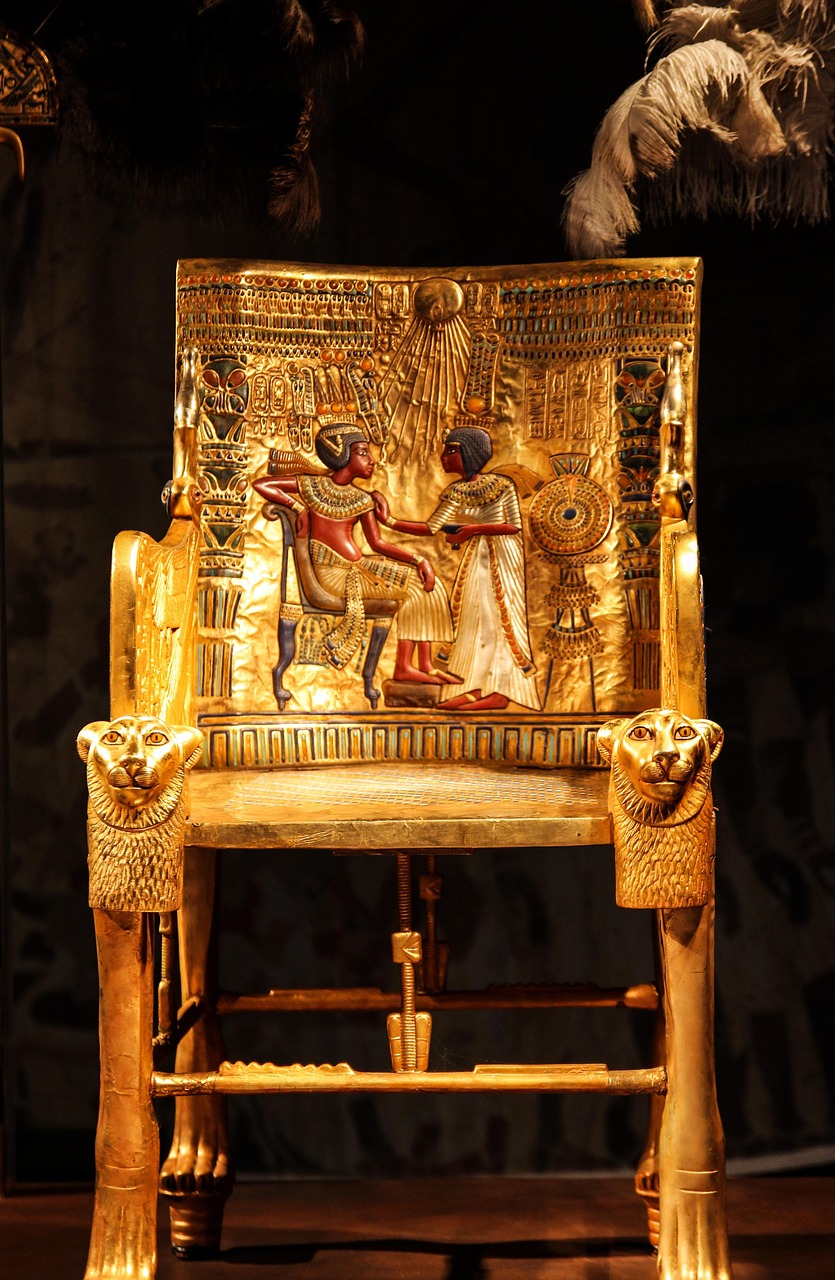
Secrets of the Mummies splits into several sections and short biographies of notable figures. I was a curious child with a healthy appetite for history in general, but what turned young curiosity into a lifetime obsession was the book’s page-long biography of Pharaoh Tutankhamun.
The image that accompanied the biography was of a young man on a speeding chariot, chasing down an ostrich with a bow in hand – an energetic, young Pharaoh on the hunt. The biography itself explains that Tutankhamun became Pharaoh at a young age, 8 or possible 10. I was probably 8 at the time and latched on immediately to the idea of someone so near my age having to rule.
I don’t think there is anything more powerful in story telling than the moment we see ourselves in a character or person. My thoughts turned to how serious, how solemn and lonely, such a young boy taking up that much responsibility must have been.
The book does not get into the complicated religious and political turmoil that Tutankhamun inherited during the Amarna period. It does not mention his parents, his upbringing in Akhetaten, or that the Egypt he ruled over was an empire nearly at its height.
Unaware of these details, all I could do was imagine what I might feel if I was suddenly sat upon a throne as a child. When, at the end of the short biography, I learned that the “Boy King” died at around 18, which in my mind represented the very beginning of adulthood and real life, I felt the loss closely. The empathy of a 2nd grader, an unweighted and starkly self-justified emotion, still inspires me in my writing.
Later, I would learn the names surrounding Tutankhamun (Akhenaten, Nerfertiti, Tiye, Horemheb, Ay, Ankhesenamun) and would feel that same empathy stretched over nearly five thousand years. I hope, through this blog and my narrative writing, to share the wonder and connection back in time to people who live the same sort of lives with the same sort of emotions as humans always have. Thank you for joining me. I sincerely hope you enjoy it.
